


Furnace Tune-Up vs. Furnace Inspection: What Does Your Denver Home Actually Need?
Quick answer: If your furnace heats normally and you want to prepare for winter, request a seasonal furnace tune-up that includes a safety inspection. If you are buying a house, checking an older system, or investigating a specific concern, request a condition-focused inspection with written findings. If the furnace has stopped heating, trips repeatedly, or behaves abnormally, request diagnostic repair service. A carbon monoxide (CO) alarm, suspected gas leak, or smoke calls for immediate safety action, not a routine appointment.
The confusing part is that companies use “inspection,” “tune-up,” and “maintenance” differently. One contractor's inspection may include combustion and airflow measurements; another may mean a visual look. The most useful question is not which label sounds more thorough. It is what will the technician measure, service, document, and do if a fault appears?
Denver homeowners face real winter demands: long heating runs, cold snaps, older homes with changed ductwork, and equipment installed for different conditions. A visit should give you a clear picture of both safe operation and actual heating performance. For the seasonal basics, Teamwork HVAC's Colorado pre-winter HVAC checklist is a useful companion.
What is the Difference Between a Furnace Inspection and a Tune-up?
An inspection evaluates the system's visible condition, operation, and safety. Its deliverable should be a set of findings: what was checked, what passed, what requires attention, and what could not be assessed without further testing or access. It may be part of a home purchase, a second opinion, or a focused safety concern.
A tune-up is preventive maintenance: inspection plus appropriate service, such as cleaning accessible components when indicated, checking or replacing the filter, verifying operation and settings, and making allowed adjustments under the manufacturer's instructions. A good tune-up still reports defects rather than masking them with a quick adjustment. ENERGY STAR recommends an annual pre-season heating check-up and lists thermostat, electrical, controls, gas connections, gas pressure, combustion, and heat-exchanger checks among typical tasks. Read the ENERGY STAR maintenance checklist.
A diagnostic visit begins with a symptom and works toward its cause. A technician may have to run targeted tests and quote a repair. You may need this even if a seasonal tune-up was completed recently. Teamwork HVAC explains why preventive maintenance can save money, but maintenance cannot guarantee that parts will never fail.
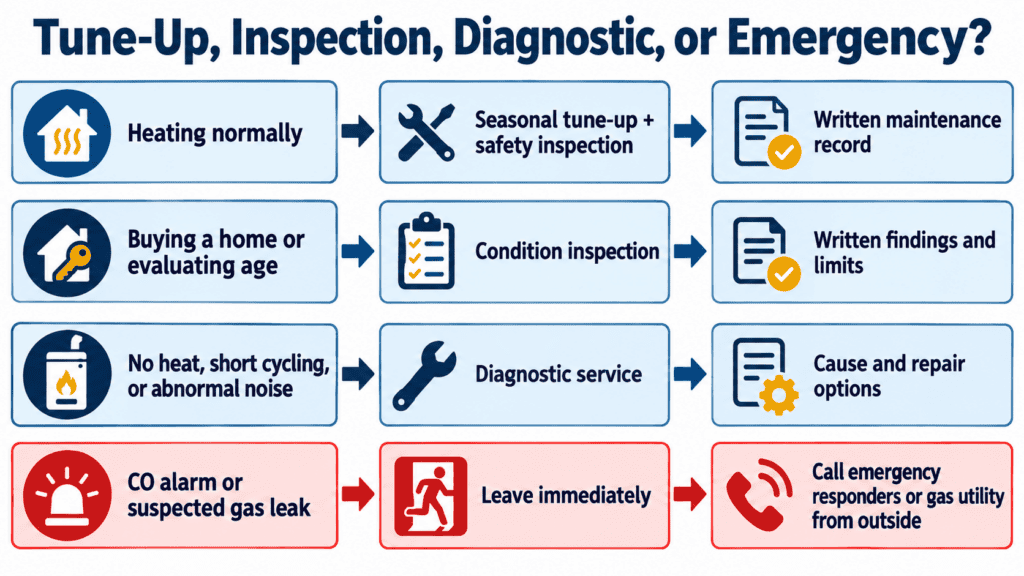
| Your situation | Best appointment to request | Outcome to ask for |
|---|---|---|
| No unusual symptoms; fall preparation | Seasonal tune-up including safety inspection | Written checklist, measurements, completed service, recommended follow-up |
| Home purchase, unknown history, older unit | Condition-focused inspection | Documented condition, limitations, priority of defects; separate repair quote if needed |
| Weak heat, short cycling, unusual noise, repeated lockout | Diagnostic service | Cause, test findings, safe repair options, estimate |
| CO alarm, suspected gas leak, smoke | Emergency response | Leave the area and call appropriate emergency or utility responders from outside |
Original insight: An appointment's value depends less on its marketing name than on whether it answers four questions: Is it operating safely? Is it moving enough air? Is it heating as intended? What should happen next? If a quote or checklist cannot answer those questions, ask what testing is included before booking.
What Should a Meaningful Furnace Inspection Include?
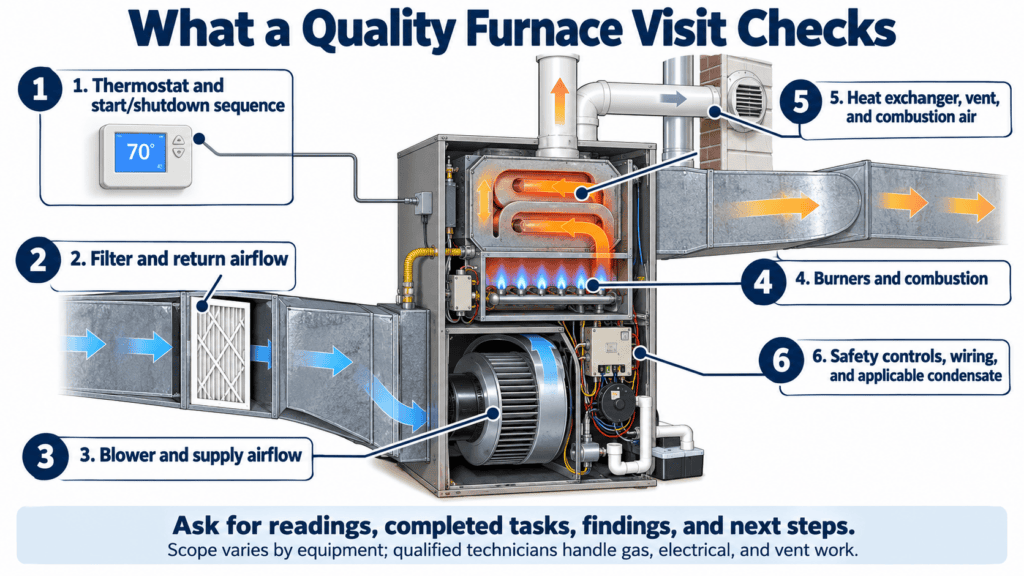
Exact steps depend on whether the unit is gas or electric, its age and design, manufacturer instructions, access, and the reason for the visit. For a gas forced-air furnace, ask whether the technician will address the following where applicable:
- History and symptoms: past repairs, irregular starts, odors, noises, cold rooms, high bills, or alarm events.
- Air path: filter fit and condition, returns and supplies, blower operation, and evidence of restriction or duct leakage. A dirty filter is one potential cause, not proof of the whole diagnosis. See Teamwork HVAC's filter replacement guidance and furnace ductwork inspection guide.
- Heating sequence and controls: thermostat call, ignition, flame establishment, blower timing, high-limit and other safety controls, and normal shutdown. Repeated high-limit trips are clues to investigate, not a reason to bypass a control.
- Fuel and exhaust system: visible gas piping, appliance connections, burner condition, venting, combustion air, and accessible heat-exchanger condition; appropriate measurements and testing when concerns warrant them. See Teamwork HVAC's guides to gas pressure testing and furnace venting and exhaust.
- Electrical and condensate components: connections, motor operation, and condensate disposal on condensing units, as applicable.
- Record of findings: recorded readings with context, what was cleaned or adjusted, photographs if useful, urgent defects, optional improvements, and any testing limitations.
A heat exchanger cannot always be fully viewed in place. A visual inspection alone cannot guarantee that a furnace will never produce CO. Combustion readings, operating observations, alarm coverage, and a response plan all serve different purposes. Teamwork HVAC's home-heating CO safety article provides additional context.
What Does a Furnace Tune-up Add?
Once the technician establishes the system's condition, maintenance may include cleaning burners or flame-sensing components when needed, checking the blower and filter, clearing an accessible condensate path, tightening suitable connections, correcting settings, and retesting operation. The right tasks depend on the equipment; cleaning everything indiscriminately or changing gas settings without measurements is not a quality standard.
Ask for before-and-after information when a change is made. For example: What was the observed fault? What cleaning or adjustment was performed? What reading or behavior changed afterward? That makes the visit useful the next time someone services the equipment. For an example of one specific maintenance item, see Teamwork HVAC's flame sensor maintenance article.
Myth: “A furnace tune-up always means a repair is included.” Routine service and a significant repair are often priced separately. Ask whether diagnostic time, replacement parts, combustion analysis, or follow-up visits carry separate charges. A good company should explain the finding and obtain your approval before additional work.
Which Appointment Makes Sense For Your Home?
Choose a seasonal tune-up when the furnace appears normal
Schedule ahead of sustained winter use if the unit has been reliable and you simply want a documented check and preventive service. This is particularly useful if the maintenance history is thin, the filter needs regular attention, or the system worked hard last winter. You can also review Teamwork HVAC's furnace efficiency tips.
Choose an inspection when you need a decision
For a home purchase, an older unit, unclear repair history, or a second opinion on replacement, specify that you want a condition assessment, not just a coupon tune-up. Ask the technician to distinguish observed defects from expected age, estimate near-term risks without pretending to predict a failure date, and state what further investigation would change the recommendation. If you are comparing equipment types, Teamwork HVAC's boilers versus furnaces guide can help frame the discussion.
Choose diagnostics when the system gives you a symptom
No heat, repeated cycling, a new rattle, a persistent sharp smell, cold supply air, or frequent breaker trips needs a cause-based visit. Tell the dispatcher the exact symptom and when it began. A tune-up is unlikely to be the right appointment label if the furnace cannot complete a normal heating cycle. Review Teamwork HVAC's Denver no-heat steps and its first-start furnace odor guide for symptom-specific context.
Treat alarm or gas concerns as immediate safety issues
CO has no smell. If a CO alarm sounds or people have symptoms compatible with exposure, get everyone into fresh air and contact emergency responders from outside. If you suspect a gas leak or smell rotten eggs, leave without operating switches or equipment and call the gas utility or emergency services from a safe place. Do not wait for a tune-up. The CDC's furnace CO safety fact sheet reinforces the need for maintained equipment and working alarms.

What Do Colorado and Denver Rules Add To The Decision?
CO alarms: Colorado's carbon monoxide alarm law establishes requirements in specified sales, permitted work, and rental situations involving fuel-fired appliances or attached garages. In covered circumstances it describes an operational alarm within 15 feet of the entrance to each room used for sleeping, or a location specified by an applicable code. The Denver Fire Department's residential fire safety handout provides local alarm guidance. Check the applicable current code and the device manufacturer's instructions for your home; alarm coverage is a separate household task from servicing the furnace.
Permits: An annual maintenance visit is different from replacing heating equipment. Denver lists forced-air heating systems among mechanical work eligible for its residential quick-permit process; project details determine the actual permit path. If a technician recommends replacement, ask who will obtain permits and arrange required inspections. A technician's “furnace inspection” is not the same thing as a municipal inspection following permitted installation.
Equipment planning: Colorado's equipment-emissions rules affect some new heating equipment, not a blanket requirement to remove every operating furnace. Specific product compliance should be checked against the current Colorado Air Quality Control Commission regulations when discussing replacement. Teamwork HVAC's Colorado emissions explainer is useful background, while the state rules control the exact requirement. Routine inspection or tune-up is not itself a legal replacement order.
Denver-specific performance: At local elevation, correct equipment setup and manufacturer instructions matter. Weak heat should not automatically be blamed on altitude; airflow, venting, gas input, controls, and duct design need evidence-based evaluation. Read Teamwork HVAC's Denver altitude and HVAC performance guide.
What Should You Ask Before Scheduling?
- “Does this visit include both a safety inspection and preventive service?”
- “Which operating measurements and safety checks apply to my furnace?”
- “Will I receive the readings and a written list of completed tasks and findings?”
- “How do you handle a problem that requires separate diagnostic time or a repair?”
- “Is the price for one furnace, and what might cost extra?”
- “If replacement comes up, will you explain repair, replacement, and permit considerations separately?”
Before the appointment, note the model if accessible without opening service panels, list any recent symptoms, locate the last service record, and clear access to the equipment. You can replace an accessible homeowner-serviceable filter according to its instructions. Leave combustion, wiring, gas, and venting work to a qualified professional. If you have a heat pump with a furnace backup, mention both systems when booking because their maintenance scopes differ.
Common Misconceptions That Lead To The Wrong Service Call
“Inspection and tune-up are standardized packages.” Their scopes vary. Request the actual task list and deliverable.
“A clean filter proves the furnace is safe.” A filter check says little about combustion, venting, or controls.
“A CO detector replaces furnace service.” An alarm can warn of exposure; it does not identify or correct a fault. Likewise, a passing furnace visit does not replace proper alarms.
“A high utility bill proves I need a new furnace.” Weather, thermostat use, duct leakage, filter restrictions, system faults, and rates can all contribute. Diagnose before choosing replacement.
“An inspection guarantees the furnace will last all winter.” An inspection describes conditions observed at the time and any limitations; a component can still fail later. A useful report improves decisions without making impossible promises.
Frequently Asked Questions
1. Is a furnace tune-up the same as an inspection?
No universal definition applies. A thorough tune-up should include an inspection and preventive service, while a stand-alone inspection may focus on condition and documentation. Ask for the written scope.
2. How often should a Denver homeowner have a furnace checked?
An annual pre-season professional heating check-up is a practical baseline consistent with ENERGY STAR guidance. Follow the manufacturer's requirements and arrange additional diagnosis if symptoms arise.
3. Is a furnace inspection necessary for a newly purchased home?
It is a sensible way to clarify equipment condition, especially when service records are absent. Ask for an HVAC-specific condition report; a general home inspection may not include operational testing in depth.
4. Can a technician find a cracked heat exchanger during a tune-up?
A technician can inspect accessible areas and pursue concerning evidence, but access and test methods vary by model. Ask what was examined, what was observed, and whether further testing is indicated; no single quick visual check guarantees a sound heat exchanger.
5. Will a tune-up lower my heating bill?
Correcting a specific issue may improve performance, but savings are not guaranteed. The result depends on the original condition, heating demand, thermostat use, energy rates, and the work performed.
6. Should I book a tune-up if the furnace is not heating?
Request diagnostic repair service and describe the failure. The technician can recommend maintenance after the immediate cause has been identified and addressed.
7. Does a gas furnace need CO alarms even after inspection?
Yes. Keep suitable working alarms as required by applicable law and codes, and follow the alarm maker's installation and testing instructions. Professional service and alarms address different parts of safety.
8. Is a furnace inspection the same as a Denver permit inspection?
No. A contractor's service inspection evaluates system condition. A municipal inspection relates to permitted installation work and code compliance.
9. What if the technician recommends replacement immediately?
Ask for the specific finding, test result, safety consequence, repair option if appropriate, and a written estimate. For an unsafe system, follow the technician's shutdown instructions and arrange prompt resolution; a second opinion can help when there is no immediate hazard.
10. Can I do the tune-up myself by replacing the filter?
Changing the correct homeowner-serviceable filter helps maintain airflow, but it does not check combustion, venting, controls, or electrical components. Use the manufacturer's instructions and a qualified technician for professional service.

What You Should Do Next. . .
You do not need to guess at a service name. Start with what your furnace is doing today. If it is heating normally, book a pre-season tune-up with a documented safety inspection. If you need to judge the condition of an older system or a recent home purchase, request an inspection with written findings. If something is wrong, describe the symptom and ask for diagnostics. For an alarm or suspected gas leak, leave and get emergency help first.
Teamwork HVAC can help you understand the findings, prioritize what matters, and plan the next step for your Denver-area home. Contact Teamwork HVAC or call 720-447-3157 to explain your system and schedule the appropriate visit. A clear diagnosis now can make the next cold night easier to face.
Read our last article here:https://teamworkhvac.com/why-does-my-air-…tioner-freeze-up/


