


Ductless vs Central HVAC Systems: Pros, Cons, and Which Fits Your Property Best
When it’s time to upgrade or replace your heating and cooling system, one of the biggest decisions property owners face is whether to install a traditional central HVAC system or switch to a ductless mini-split system.
The right answer depends on your building layout, energy goals, renovation plans, budget, and long-term comfort expectations. A large single-family home may benefit from central air, while a duplex, apartment, older retrofit property, or addition may perform far better with a ductless solution.
Choosing the wrong system can lead to uneven temperatures, higher energy bills, unnecessary installation costs, and comfort complaints that never seem to go away.
Understanding the strengths and limitations of each system helps property owners make a smarter investment that improves efficiency, comfort, and long-term operating costs.
What Is a Central HVAC System?
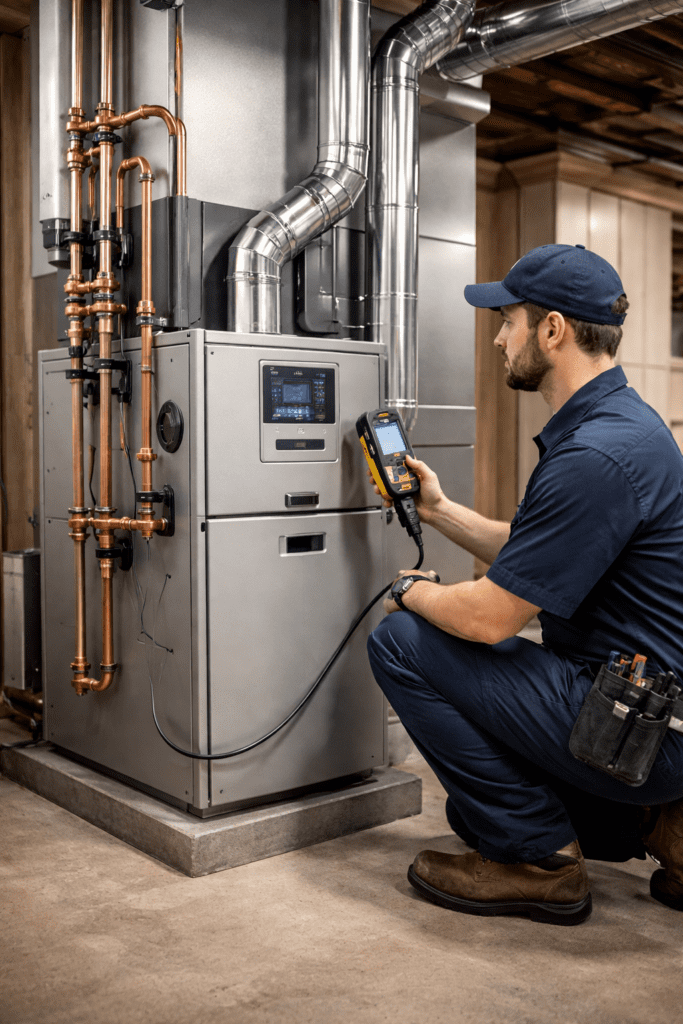
A central HVAC system uses a single indoor unit connected to ductwork that distributes conditioned air throughout the property. These systems are common in newer homes, large residential properties, commercial offices, and buildings already designed with duct infrastructure.
Central HVAC systems typically include:
- Furnace or air handler
- Outdoor condenser unit
- Supply and return ductwork
- Thermostat control system
- Air filtration components
The system heats or cools air centrally and pushes it through ducts into each room.
Best Applications for Central HVAC
Central systems are often ideal for:
- Larger homes
- Multi-room layouts
- Properties with existing ductwork
- New construction
- Whole-home temperature consistency
- Commercial buildings requiring centralized control
What Is a Ductless HVAC System?
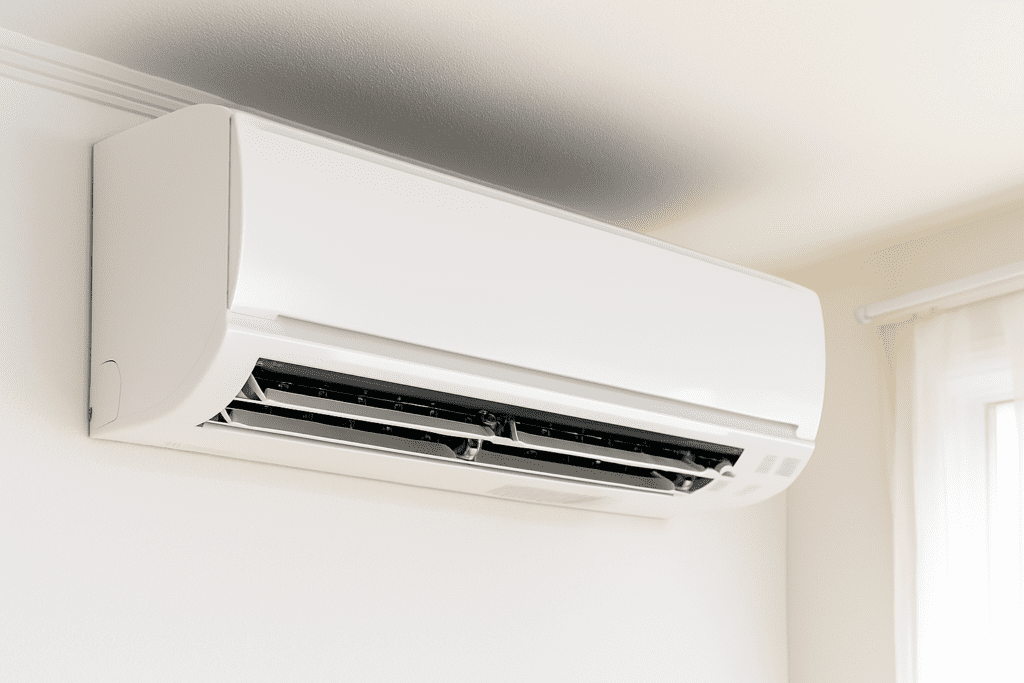
Ductless systems — often called mini-splits — use individual indoor air handlers mounted in specific rooms or zones. Each indoor unit connects directly to an outdoor condenser through small refrigerant lines instead of large duct systems.
These systems allow property owners to heat or cool specific areas independently.
Best Applications for Ductless Systems
Ductless systems work exceptionally well for:
- Apartments
- Small homes
- Older homes without ducts
- Historic properties
- Home additions
- Garages and workshops
- Server rooms
- Multi-family retrofits
- Finished basements
- Spaces with inconsistent temperatures
Because they avoid duct installation, ductless systems can dramatically reduce renovation complexity in retrofit projects.
Energy Efficiency: Which System Saves More?
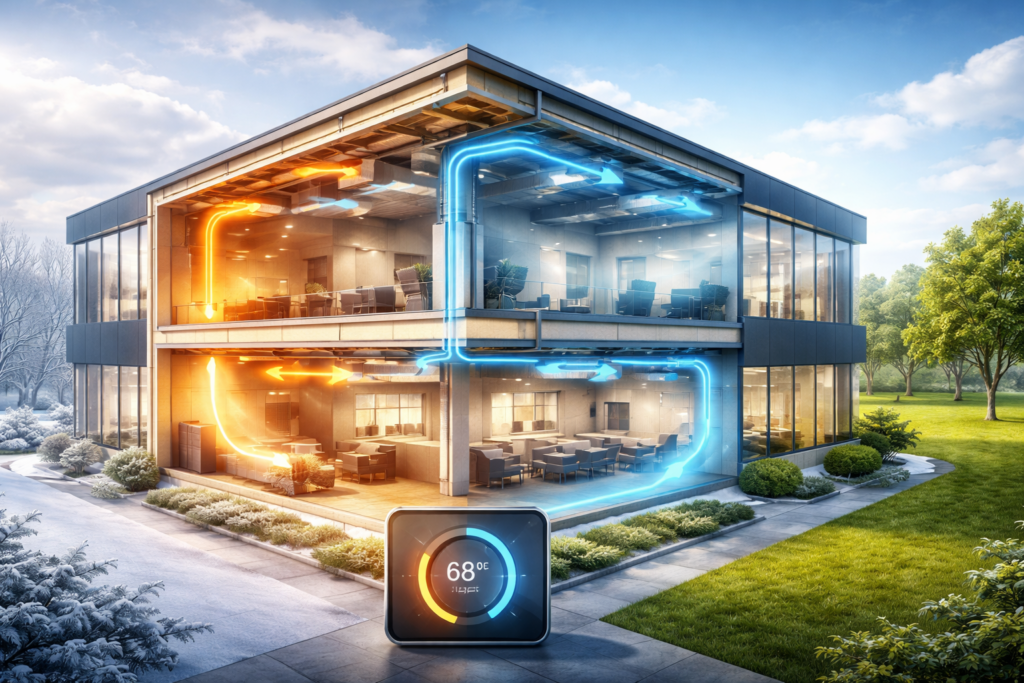
Energy efficiency is one of the biggest reasons many homeowners and property managers consider ductless HVAC systems.
Central HVAC Efficiency
Modern central systems can be highly efficient, especially high-SEER heat pumps and variable-speed systems. However, duct losses remain a major issue.
According to the U.S. Department of Energy, duct losses can account for more than 20% of heating and cooling energy usage in some homes.
Leaks, poor insulation, and improperly sized duct systems reduce efficiency significantly over time.
Ductless HVAC Efficiency
Ductless systems eliminate duct losses entirely. Because they condition individual zones independently, they also reduce wasted energy.
For example:
- Empty guest room? Don’t cool it.
- Finished basement only used occasionally? Run that zone only when needed.
- Apartment with varying occupancy? Adjust each space independently.
This zoning capability often results in lower monthly energy costs.
Also Read 📖Boilers vs. Furnaces: Which Heating System Meets Today’s Efficiency Standards?
Installation Differences: What Property Owners Should Know
Installation complexity can heavily influence the overall project cost and timeline.
Central HVAC Installation
Installing or replacing central HVAC often involves:
- Duct design
- Duct replacement or repair
- Ceiling/wall access
- Larger equipment footprint
- Electrical upgrades
- Longer labor timelines
In new construction, this process is straightforward because ducts are built into the structure.
In older properties, however, installing ductwork can become invasive and expensive.
Ductless Installation
Ductless systems require:
- Small wall penetrations
- Refrigerant line routing
- Indoor air handler placement
- Outdoor condenser installation
Most installations are completed much faster than central systems.
For retrofit properties, this can be a major advantage because it minimizes structural disruption.
Cost Differences: Upfront vs Long-Term

Many property owners focus only on installation price, but long-term operating costs matter just as much.
Central HVAC Costs
Central systems may be cost-effective if:
- Ductwork already exists
- The home is large
- Multiple zones aren’t necessary
- Whole-home conditioning is preferred
However, replacing old ducts or adding new duct infrastructure can dramatically increase total project costs.
Ductless HVAC Costs
Ductless systems may have:
- Lower installation costs in retrofit situations
- Lower labor requirements
- Lower renovation expenses
- Reduced operating costs over time
But multi-zone ductless systems can become more expensive when conditioning many rooms individually.
The best financial choice depends heavily on the property layout and intended usage.
Also Read📖How Can You Lower Heating & Cooling Bills Year-Round?
Comfort Control: Room-by-Room vs Whole-Home
Comfort preferences play a major role in HVAC satisfaction.
Central HVAC Comfort
Central systems excel at:
- Maintaining consistent whole-home temperatures
- Large-scale airflow management
- Unified thermostat control
- Cleaner visual appearance
However, some homes struggle with:
- Hot and cold spots
- Upstairs/downstairs imbalance
- Long airflow runs
- Poor duct balancing
Ductless Comfort
Ductless systems provide:
- Individual room temperature control
- Zoned comfort
- Faster response times
- Better customization for occupants
This is especially valuable in:
- Multi-family buildings
- Apartments
- Guest suites
- Mixed-use spaces
- Buildings with inconsistent occupancy
Which System Is Better for Older Homes?

Older homes create unique HVAC challenges.
Many older properties were built before central duct systems became common. Installing ducts later may require:
- Opening walls
- Lowering ceilings
- Structural modifications
- Extensive remodeling
In these situations, ductless systems often become the more practical solution.
Real-World Retrofit Scenario
A property owner renovating a 1940s duplex may discover that adding traditional ductwork would require removing portions of plaster ceilings and sacrificing closet space.
Instead, a multi-zone ductless system could provide:
- Independent tenant control
- Lower renovation disruption
- Improved efficiency
- Faster installation
- Lower structural impact
For many retrofit projects, ductless systems solve comfort problems without creating major construction challenges.
Indoor Air Quality Considerations
Indoor air quality is becoming increasingly important for homeowners and commercial property managers alike.
Central HVAC IAQ Advantages
Central systems can support:
- Whole-home filtration
- UV purification systems
- Humidity control
- Advanced air cleaners
This makes them attractive for larger properties needing centralized air management.
Ductless IAQ Considerations
Ductless systems avoid dirty duct contamination but require regular filter maintenance on each indoor unit.
Without proper maintenance:
- Dust accumulation increases
- Efficiency drops
- Airflow decreases
Routine service remains critical regardless of system type.
Also Read 📖Why Do Denver’s HVAC Emissions Standards Matter for Air Quality and Comfort?
Maintenance Differences
Central HVAC Maintenance
Central systems require:
- Duct inspections
- Filter changes
- Coil cleaning
- Blower maintenance
- Airflow balancing
Ductless Maintenance
Ductless systems require:
- Indoor head cleaning
- Condensate inspections
- Filter cleaning
- Refrigerant checks
While ductless systems avoid duct maintenance, multiple indoor units may increase cleaning frequency.

Which HVAC System Fits Your Property Best?
Central HVAC May Be Best If:
- Your property already has ductwork
- You want whole-home temperature consistency
- You own a larger home
- You prefer hidden equipment
- You want centralized filtration
Ductless HVAC May Be Best If:
- You own an older home
- You’re remodeling or retrofitting
- You need zoning flexibility
- You want energy-efficient room control
- You’re conditioning additions or apartments
- You want faster installation with less disruption
There is no universal “best” system — only the best solution for your specific property, layout, occupancy, and long-term goals.
Why Professional HVAC Design Matters
One of the biggest mistakes property owners make is choosing HVAC equipment before evaluating the building itself.
Improper sizing, poor airflow planning, and rushed installations can reduce efficiency and shorten equipment lifespan regardless of the system type.
A professional HVAC evaluation helps determine:
- Load requirements
- Insulation impact
- Airflow needs
- Zoning opportunities
- Energy optimization
- Long-term operational savings
The best HVAC system is one designed around the property — not simply the newest equipment on the market.
Conclusion
Both ductless and central HVAC systems offer major advantages when properly matched to the property.
Central systems remain an excellent choice for larger homes and buildings with existing duct infrastructure, while ductless systems continue gaining popularity for retrofits, apartments, additions, and energy-conscious zoning applications.
As energy costs rise and property owners look for smarter comfort solutions, choosing the right HVAC strategy has become more important than ever.
The key is understanding how the system will perform in your actual building — not just comparing equipment brochures.
If you’re evaluating HVAC options for your home, apartment complex, office, or retrofit project, working with an experienced HVAC professional can help you avoid expensive mistakes and maximize long-term comfort and efficiency.
10 FAQs
1. Is ductless HVAC more energy efficient than central air?
In many cases, yes. Ductless systems avoid duct energy losses and allow room-by-room temperature control.
2. Are mini-split systems good for entire homes?
Yes. Multi-zone ductless systems can heat and cool entire homes effectively when properly designed.
3. Does central HVAC work better in large homes?
Typically yes, especially when existing ductwork is already installed and properly balanced.
4. Are ductless systems expensive to install?
They can be cost-effective for retrofits because they avoid expensive duct installation.
5. Which HVAC system is best for older homes?
Ductless systems are often ideal for older homes without existing ductwork.
6. Do ductless systems require maintenance?
Yes. Indoor filters and components require regular cleaning and inspection.
7. Can ductless systems heat in winter?
Modern heat pump mini-splits perform very well even in cold climates.
8. Is central HVAC quieter than ductless?
Central systems may be quieter inside living spaces because equipment is more centralized.
9. Which system lasts longer?
Both systems can last many years with proper professional maintenance.
10. Can ductless systems improve comfort in additions?
Yes. They are one of the best solutions for additions, garages, and converted spaces.


