


Colorado Summer Storms Can Be Tough on More Than Just Roofs
 When severe weather rolls across the Front Range, most homeowners focus on the obvious concerns.
They check their roof.
They inspect their gutters.
They look for broken windows.
They examine their vehicles for hail damage.
What often gets overlooked is the outdoor air conditioning system quietly sitting beside the home.
Yet that piece of equipment is exposed to every hailstorm, thunderstorm, wind event, and lightning strike Colorado can produce.
Throughout Denver, Aurora, Castle Rock, Parker, Highlands Ranch, and surrounding communities, summer storms can create hidden HVAC damage that may not be noticed until weeks or months later.
In many cases, homeowners don't connect declining cooling performance with a storm that happened earlier in the season.
By the time symptoms become obvious, minor damage may have evolved into a more expensive repair.
Understanding how Colorado storms affect air conditioning systems can help homeowners protect their investment and maintain reliable comfort throughout the summer.
Why Colorado Storms Are Different
Colorado weather is known for its unpredictability.
A beautiful 90-degree afternoon can quickly transform into a severe thunderstorm with hail, strong winds, heavy rain, and frequent lightning.
These rapidly changing conditions create unique challenges for HVAC equipment.
Unlike many parts of the country where storms develop more gradually, Colorado weather often produces sudden and intense impacts.
Outdoor air conditioning systems have no opportunity to prepare.
They simply absorb whatever nature delivers.
This is why HVAC professionals throughout Colorado routinely inspect systems for storm-related damage following severe weather events.
Also Read ⛈️Why Is My Air Conditioner Struggling to Keep Up During Colorado Heat Waves?
The Hidden Cost of Hail Damage

When homeowners think about hail damage, they usually think about roofing claims.
However, air conditioning condensers are among the most vulnerable components around a home.
The outdoor condenser contains hundreds of delicate aluminum fins designed to release heat collected from inside your home.
These fins are incredibly important to cooling performance.
When hail strikes the unit, several things can happen.
The fins may bend.
Airflow may become restricted.
Heat transfer efficiency can decrease.
The unit may require longer run times to maintain indoor comfort.
At first, homeowners often don't notice any difference.
The system still turns on.
The house still cools.
But over time, efficiency begins to decline.
Energy consumption rises.
Wear and tear increase.
The equipment must work harder to accomplish the same result.
Even relatively minor hail damage can have long-term effects on cooling performance.
Real Colorado Homeowner Scenario
A homeowner in Centennial experienced a severe July hailstorm that damaged portions of their roof and landscaping.
Insurance adjusters inspected the roof, siding, and gutters.
Everything seemed under control.
Several weeks later, the homeowner noticed something unusual.
The air conditioner seemed to run longer than normal.
Utility bills were climbing despite similar temperatures.
Indoor comfort wasn't quite the same.
During a routine HVAC inspection, technicians discovered significant hail damage to the condenser fins.
The unit was still functioning, but airflow restrictions were reducing efficiency.
Because the damage was identified early, corrective action prevented larger repairs and restored system performance.
This scenario plays out repeatedly across Colorado every summer.
Also Read ⛈️Lower HVAC Bills With Smart Seasonal Efficiency Tips
Lightning and Power Surges Can Damage HVAC Electronics
Many homeowners assume lightning damage only occurs when a home receives a direct strike.
In reality, nearby lightning strikes can generate electrical surges capable of damaging HVAC equipment.
Modern air conditioning systems contain sophisticated electronics that help regulate operation and efficiency.
These components are sensitive to electrical fluctuations.
A power surge may damage:
- Capacitors
- Control boards
- Thermostats
- Sensors
- Compressors
- Communication modules
Sometimes the damage is immediate.
Other times, weakened components continue functioning temporarily before failing weeks later.
If your air conditioner begins acting differently after a thunderstorm, electrical surge damage should be considered as a possible cause.
Chiller Installation & Repairs
Wind-Blown Debris Can Restrict Airflow

Colorado thunderstorms frequently produce strong wind gusts.
Those winds carry:
- Cottonwood debris
- Leaves
- Dirt
- Grass clippings
- Branches
- Landscaping materials
Much of this material eventually settles around HVAC equipment.
When debris accumulates near a condenser unit, airflow becomes restricted.
The system must work harder to reject heat.
Efficiency declines.
Cooling performance suffers.
After major storms, homeowners should inspect the area around their outdoor equipment and carefully remove any debris that may interfere with operation.
Maintaining adequate clearance around the condenser helps support proper airflow and system performance.
Also Read ⛈️Ductless vs Central HVAC: Which System Fits Best?
Flooding and Drainage Issues Are Often Overlooked
Colorado's reputation as a dry state sometimes causes homeowners to underestimate the impact of heavy rainfall.
Summer thunderstorms can produce significant rain in a short period of time.
Poor drainage conditions may create standing water around outdoor HVAC equipment.
While most modern condensers are designed to withstand normal weather exposure, prolonged flooding can contribute to:
- Electrical concerns
- Soil erosion
- Foundation shifts
- Condensate drainage issues
- Premature equipment wear
Homeowners should pay attention to drainage patterns around their property and address any areas where water consistently accumulates near HVAC equipment.
Why Your HVAC May Still Work After Storm Damage
One of the biggest misconceptions homeowners have is believing that if the air conditioner still turns on, everything must be fine.
Unfortunately, that's not always true.
Many storm-related HVAC issues develop gradually.
A hail-damaged condenser may continue cooling for months.
A partially damaged capacitor may function until peak summer demand arrives.
Electrical components weakened by power surges may fail long after the storm has passed.
This delayed failure pattern makes professional inspections especially valuable after severe weather events.
The goal isn't simply to identify broken equipment.
The goal is to identify hidden vulnerabilities before they become expensive emergencies.
Also Read ⛈️Why Does Regular Preventive HVAC Maintenance Save You Money Long-Term?
Warning Signs Your HVAC System May Have Storm Damage
Homeowners should monitor for changes in performance following severe weather.
Potential warning signs include:
- Longer cooling cycles
- Increased utility bills
- Reduced airflow
- Uneven temperatures
- Strange noises
- Warm air from vents
- Frequent cycling
- System shutdowns
- Thermostat communication problems
Any noticeable change following a storm deserves further investigation.
Also Read ⛈️What Happens When Heating or A/C Systems Fail in Denver Homes?
Why Colorado Homeowners Should Schedule Post-Storm HVAC Inspections
The cost of a preventative inspection is often small compared to the cost of emergency repairs.
Post-storm inspections allow HVAC professionals to:
- Identify hidden damage
- Verify electrical safety
- Evaluate airflow
- Inspect coils and fins
- Check refrigerant performance
- Confirm system efficiency
For many homeowners, this provides peace of mind and helps prevent unexpected failures during the hottest part of the summer.
Looking Ahead: Preparing for Colorado's Storm Season
While storms cannot be prevented, homeowners can reduce risk.
Helpful strategies include:
- Annual HVAC maintenance
- Surge protection devices
- Proper drainage management
- Debris removal
- Routine inspections
- Prompt storm damage evaluations
These simple steps can help extend equipment lifespan and improve reliability during Colorado's challenging summer weather.
Also Read ⛈️Why Does Regular Preventive HVAC Maintenance Save You Money Long-Term?
Conclusion
Colorado's summer storms can affect your air conditioning system in ways that are not always immediately visible. Hail, lightning, flooding, debris, and power surges all have the potential to reduce efficiency, increase wear, and create hidden damage.
The good news is that many of these issues can be identified early through proactive inspections and routine maintenance.
By including your HVAC system in your post-storm inspection checklist, you can help protect one of the most important comfort systems in your home and avoid costly surprises later in the season.
What To Do Next...
Has your home recently experienced hail, lightning, heavy rain, or severe weather?
Don't assume your air conditioner escaped damage simply because it's still running.
Contact Teamworks Mechanical today to schedule a professional HVAC inspection and make sure your system is ready for the rest of Colorado's summer season. 
Frequently Asked Questions
Can hail damage an air conditioning unit?
Yes. Hail can bend condenser fins, restrict airflow, damage coils, and reduce cooling efficiency. Even minor hail damage can increase energy costs and place additional strain on your HVAC system.
Should I inspect my air conditioner after a Colorado hailstorm?
Absolutely. Many forms of HVAC storm damage are not immediately visible. A professional inspection can identify hidden damage before it causes larger performance or reliability issues.
Can lightning damage my HVAC system?
Yes. Lightning strikes and electrical surges can damage capacitors, control boards, thermostats, compressors, and other sensitive HVAC components even if the home is not directly struck.
How do I know if my AC has storm damage?
Warning signs include longer cooling cycles, higher utility bills, reduced airflow, strange noises, warm air from vents, and inconsistent temperatures throughout the home.
Can heavy rain damage an outdoor air conditioner?
Most outdoor units are designed to withstand normal rainfall. However, flooding, standing water, poor drainage, and debris accumulation can contribute to HVAC problems.
Will my homeowner's insurance cover HVAC storm damage?
Coverage depends on your policy and the cause of damage. Many policies may cover damage caused by hail, wind, or lightning. Contact your insurance provider for specific details.
Can debris around my condenser reduce cooling performance?
Yes. Leaves, branches, dirt, cottonwood debris, and other storm-related materials can restrict airflow and force the system to work harder.
How often should I have my HVAC system inspected in Colorado?
Most homeowners should schedule professional maintenance annually. Additional inspections are recommended after severe storms or hail events.
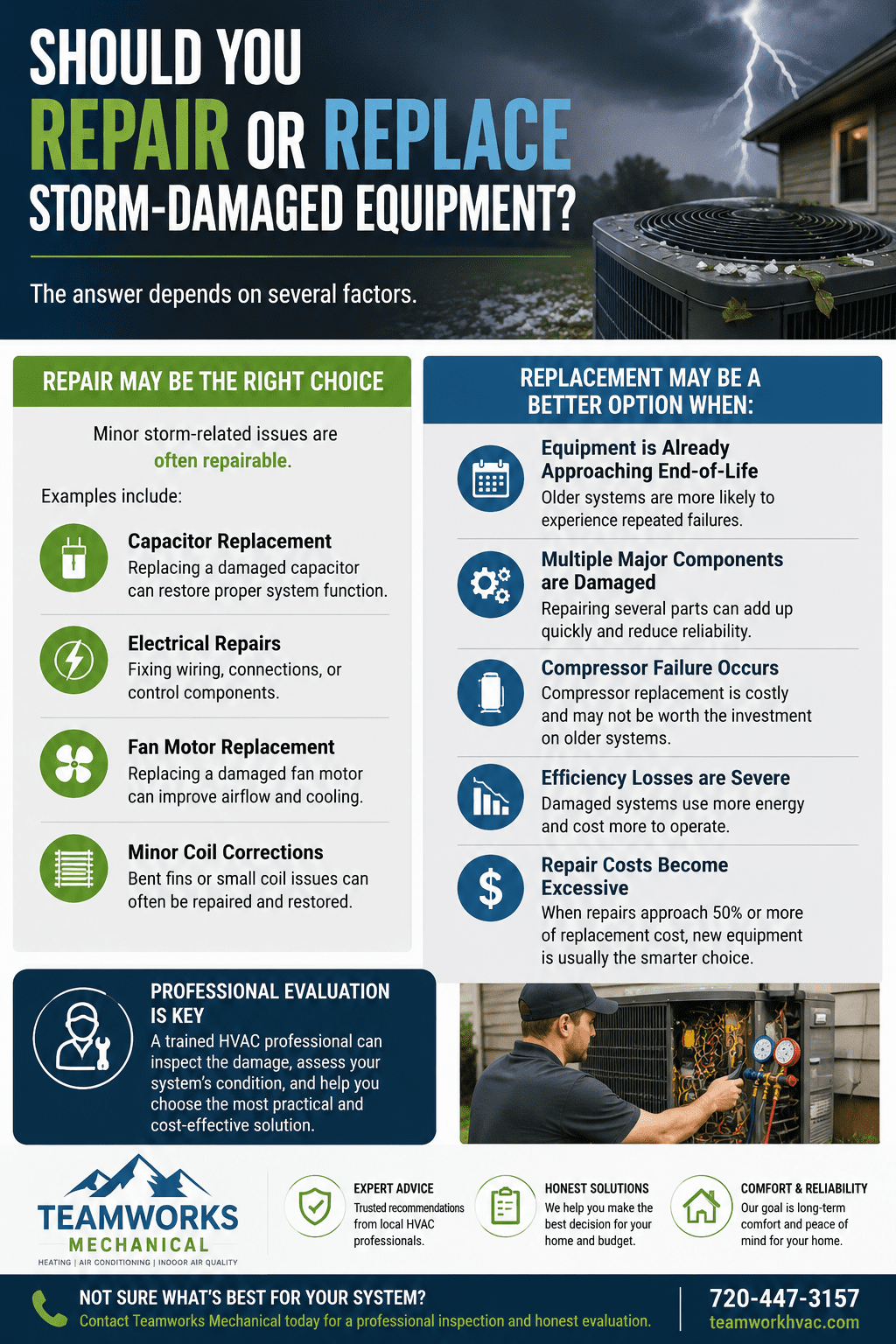
Should I repair or replace a storm-damaged air conditioner?
The answer depends on the age of the system, extent of damage, repair costs, and overall efficiency. A professional evaluation can help determine the most cost-effective option.
What is the best way to protect my HVAC system from future storms?
Routine maintenance, proper drainage, surge protection devices, debris removal, and post-storm inspections can help reduce the risk of costly storm-related HVAC damage.


