



The Problem: Why Colorado HVAC Systems Fail in Winter
Colorado winters are unforgiving to HVAC systems that enter the season unprepared. Sudden temperature drops, wide daily swings, high elevation, and prolonged dry air expose weaknesses that may go unnoticed during milder months.
Many homeowners assume winter failures are caused by aging equipment. In reality, most mid-winter breakdowns stem from systems that were never calibrated for winter operating conditions. Restricted airflow, untested combustion performance, neglected outdoor units, and incorrect humidity balance are common contributors.
When these issues surface in January, repairs become more expensive, comfort drops immediately, and system lifespan shortens.
Also Read This Article: 6 Warning Signs You Need to Replace Your HVAC System | Teamwork HVAC
Background: What “Winterizing” an HVAC System Actually Means
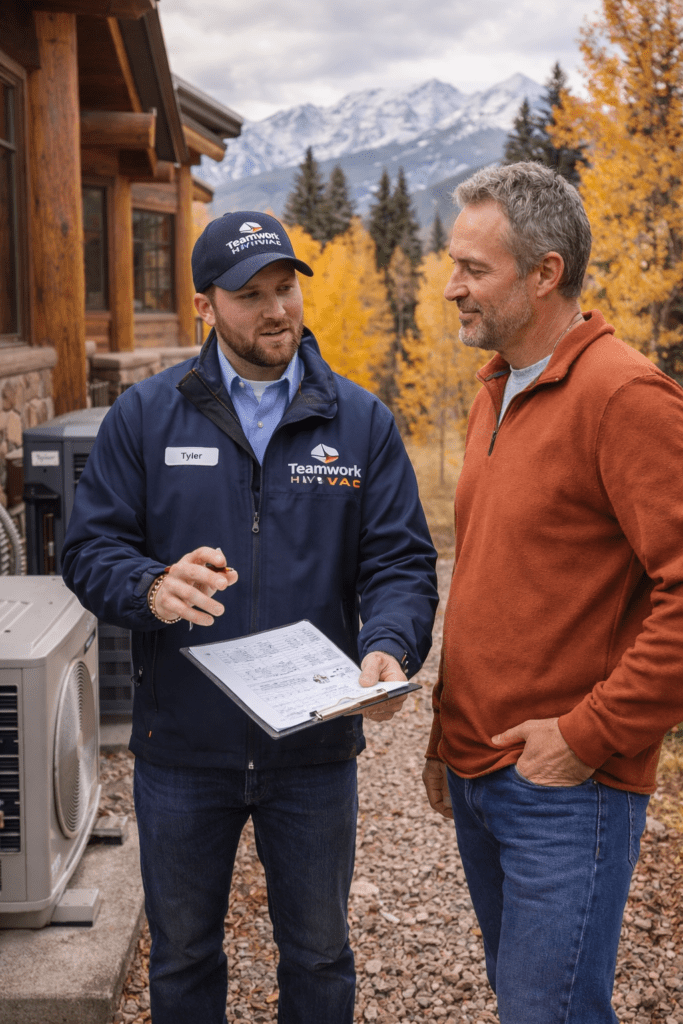
HVAC winterization is often misunderstood as a basic tune-up. In professional terms, winterization is a preventative performance and safety process designed to prepare heating equipment for sustained cold operation.
In Colorado homes, winterization must account for:
- High-altitude combustion behavior
- Rapid heating demand changes
- Dry indoor air and pressure imbalance
- Freeze–thaw exposure for outdoor components
This applies across system types, including gas furnaces, cold-climate heat pumps, dual-fuel systems, boilers, and ductless equipment. Winterizing is not optional maintenance; it is operational risk management.
Also Read This Article: Three Environmental Conditions Have Most Effect On HVAC Systems?
Historical and Regulatory Context: Why Winter Prep Matters More Now
Modern HVAC systems are more efficient than ever, but also more sensitive to improper setup. High-efficiency furnaces, variable-speed blowers, and inverter-driven heat pumps rely on precise airflow, control logic, and combustion parameters.
At the same time, evolving energy efficiency standards and refrigerant transitions are pushing systems to operate within narrower performance margins. Building envelopes are tighter, ventilation strategies are changing, and homeowners expect consistent comfort with lower energy use.
These shifts mean winter preparation is no longer about “checking the box.” It is about ensuring systems operate safely, efficiently, and predictably within modern design expectations—especially in climates like Colorado.
Professional Solutions: The Complete Pre-Winter HVAC Checklist

Comprehensive System Inspection and Altitude Calibration
Professional winterization begins with a full system inspection under operational load. This includes heat exchanger evaluation, ignition testing, electrical connection verification, and control board diagnostics.
In Colorado, combustion systems must also be tested and adjusted for altitude. Air density directly affects fuel-to-air ratios, making combustion analysis essential for safety and efficiency.
Airflow Testing and Filter Management
Restricted airflow is one of the most common causes of winter HVAC strain. Filters must be correctly sized and replaced based on system requirements, not convenience.
Professional airflow testing evaluates blower performance, static pressure, and supply-return balance. Proper airflow reduces run time, improves heat delivery, and protects critical components from premature wear.

Thermostat Accuracy and Control Optimization
Thermostats serve as the command center of the HVAC system. Before winter, accuracy must be verified against ambient temperature, and programming should be reviewed to ensure efficient recovery during cold mornings.
Smart thermostats also require firmware updates and sensor evaluation to function correctly during rapid temperature changes common in Colorado.
Ductwork Sealing and Insulation Assessment
Heat loss through duct leakage remains a major efficiency issue in many homes. Winter preparation includes sealing joints, insulating exposed duct runs, and identifying infiltration points that allow cold air intrusion.
Correct duct performance improves comfort room by room and reduces overall system demand.
Outdoor Unit and Heat Pump Preparation
Outdoor equipment faces snow accumulation, ice formation, and freeze–thaw stress. Preparation includes clearing debris, ensuring proper drainage, verifying defrost cycle operation, and confirming mounting stability.
Cold-climate heat pumps are highly effective in Colorado when properly prepared, but neglecting outdoor units reduces capacity when it is needed most.

Combustion Safety and Carbon Monoxide Protection
Fuel-burning systems must undergo combustion safety testing before heavy winter use. This includes flue inspection, draft verification, and exhaust analysis.
Carbon monoxide risks increase in winter as homes remain sealed and systems run longer. Safety verification is a non-negotiable component of professional winterization.
Also Read This Article: Carbon Monoxide Safety in Home Heating
Humidity Control and Indoor Air Quality Balance
Colorado’s winter air is extremely dry. Without proper humidity control, homes experience discomfort, increased static electricity, and respiratory irritation.
Professional winter prep evaluates humidification systems, filtration efficiency, and ventilation balance to maintain healthy indoor air without compromising system performance.
Emergency Readiness and Freeze Protection
Winter storms and outages require preparedness. Winterization includes verifying emergency shutoffs, testing backup heat sources, and ensuring freeze-protection safeguards are functioning correctly.
Prepared systems recover faster and suffer less damage during extreme events.
Teamwork HVAC’s MAC-Based Winterization Approach

Teamwork HVAC applies a MAC framework to winter preparation:
Maintenance addresses wear, cleaning, and component condition.
Assessment identifies system-specific vulnerabilities related to altitude and climate.
Calibration fine-tunes performance for efficient, safe winter operation.
This approach allows Teamwork HVAC to serve as a trusted regional authority for homeowners across Colorado, delivering preventative solutions rather than reactive repairs.
Conclusion: Winterization Is Not Optional in Colorado
Colorado winters reveal HVAC weaknesses quickly and without mercy. Proper winterization protects safety, improves efficiency, extends equipment life, and stabilizes comfort during the most demanding season of the year.
Professional preparation is not about avoiding inconvenience. It is about addressing root causes before they become failures. The logical next step for homeowners is to schedule a professional HVAC winterization and enter winter prepared—not reactive.
Contact Teamwork HVAC today for your evaluation before winter hits when you're not ready.
Also Read This Article: Tips To Avoid Common HVAC Pitfalls For Home Comfort
FAQs
1. How often should HVAC systems be winterized in Colorado?
Once every year before winter begins.

2. Does altitude affect furnace performance?
Yes, altitude impacts combustion efficiency and safety.
3. Are heat pumps reliable in Colorado winters?
Yes, when cold-climate models are properly prepared.
4. Can winter HVAC maintenance reduce heating costs?
Yes, optimized systems use less energy.
5. Is winterization necessary for newer HVAC systems?
Yes, new systems still require airflow and control calibration.
6. Does winter maintenance include carbon monoxide testing?
Professional service should always include it.
7. Why is humidity control important in winter?
Dry air affects comfort, health, and system balance.
8. How long does HVAC winterization take?
Typically 60–90 minutes depending on system complexity.
9. Can HVAC winterization prevent emergency breakdowns?
It significantly reduces the risk.
10. When is the best time to schedule winter HVAC service?
Early fall, before sustained cold weather begins.