


Yes. Denver’s elevation changes the air available for gas combustion, so a furnace must be configured and tested for its actual installation altitude. Incorrect fuel input, restricted combustion air, or venting defects can contribute to unsafe operation. Altitude alone does not mean a furnace is dangerous. Manufacturer requirements vary by equipment model and elevation.
When your furnace keeps the house comfortable on a cold Colorado morning, it is easy to assume that warm air means everything is working correctly. But comfort tells only part of the story. The system also needs to burn fuel properly and carry combustion products outdoors.
For Denver homeowners, the useful question is whether the furnace’s setup matches its model, fuel supply, elevation, and venting arrangement—and whether a technician has verified its operation.
If a carbon monoxide alarm sounds, or you suspect CO poisoning, move everyone outdoors immediately and call 911 from outside. Do not remain inside to investigate the furnace or return until emergency responders say it is safe. CDC
Why Denver’s Elevation Matters for Gas Furnaces
At higher elevations, lower atmospheric pressure means a given volume of air contains fewer oxygen molecules. The proportion of oxygen in the air stays approximately the same; there is simply less air mass in each cubic foot.
A gas furnace needs an appropriate balance of fuel and combustion air. Equipment configured for a different elevation may require manufacturer-specified changes before operating at a Denver-area property.
Installation requirements can differ even between furnaces made by the same company. The correct approach starts with the exact model and its instructions.
Our guide to How Denver’s High Altitude Affects HVAC Performance explains the broader relationship between elevation, equipment performance, and home comfort.
Does Altitude Increase Carbon Monoxide Risk?
Altitude is one factor in combustion setup. Carbon monoxide can form when carbon-containing fuel burns incompletely, and exposure becomes possible when combustion products enter occupied spaces.
An incorrect setup can contribute to poor combustion. Other concerns include obstructed exhaust, damaged vent connections, inadequate combustion air, and equipment defects. A problem may involve more than one condition.
That is why an altitude-aware evaluation must examine both how the furnace burns fuel and how exhaust leaves the building. A thermostat reaching its set temperature does not establish either one.
It is also important to separate fuel odors from CO. Carbon monoxide has no smell. If you notice an unusual furnace odor, our article Why Does My Furnace Smell When I Turn It On for the First Time? explains why different smells require different responses. Suspected fuel-gas leaks require leaving the building and contacting emergency services or the gas utility from outside.
What Does Furnace Derating Mean?
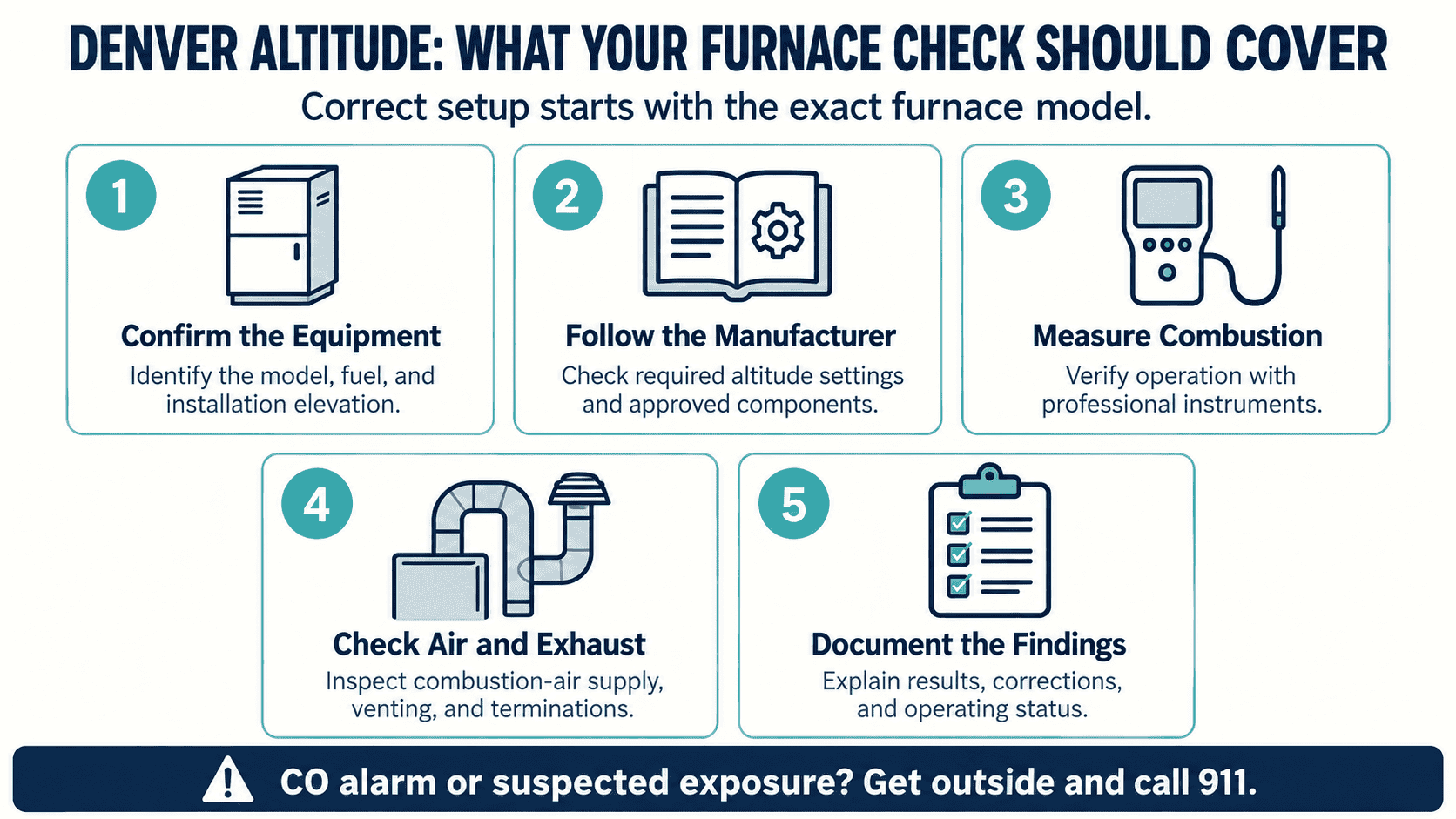
Derating means reducing a furnace’s permitted fuel input for specified operating conditions, including elevation where required.
It does not mean randomly turning down the gas valve. Depending on the equipment, the approved procedure may involve particular settings, burner orifices, pressure switches, or other specified components. The technician must also account for fuel type and the manufacturer’s instructions.
There is no single percentage reduction or gas-pressure setting that applies to every furnace in Denver.
For example, Lennox publishes model-specific instructions identifying elevation ranges that require different components or settings. Those requirements illustrate why a generic online formula cannot replace the instructions for your furnace. tech.lennoxintl.com
After any approved adjustment, the technician must verify operation. Changing a setting without checking the result leaves the most important question unanswered.
What Should a Professional Combustion Evaluation Include?
Ask what the visit includes before scheduling. A seasonal maintenance appointment, a condition inspection, and a diagnostic investigation may have different scopes.
Our Furnace Tune-Up vs. Furnace Inspection guide can help you describe the service you need.
A useful combustion evaluation should address these areas as applicable to the equipment:
- Equipment identification: Model, fuel type, installation elevation, and applicable manufacturer instructions.
- Fuel setup: Required altitude components, fuel input, and supply and manifold pressures.
- Combustion measurements: Instrument readings taken using the manufacturer’s procedures and interpreted against appropriate requirements.
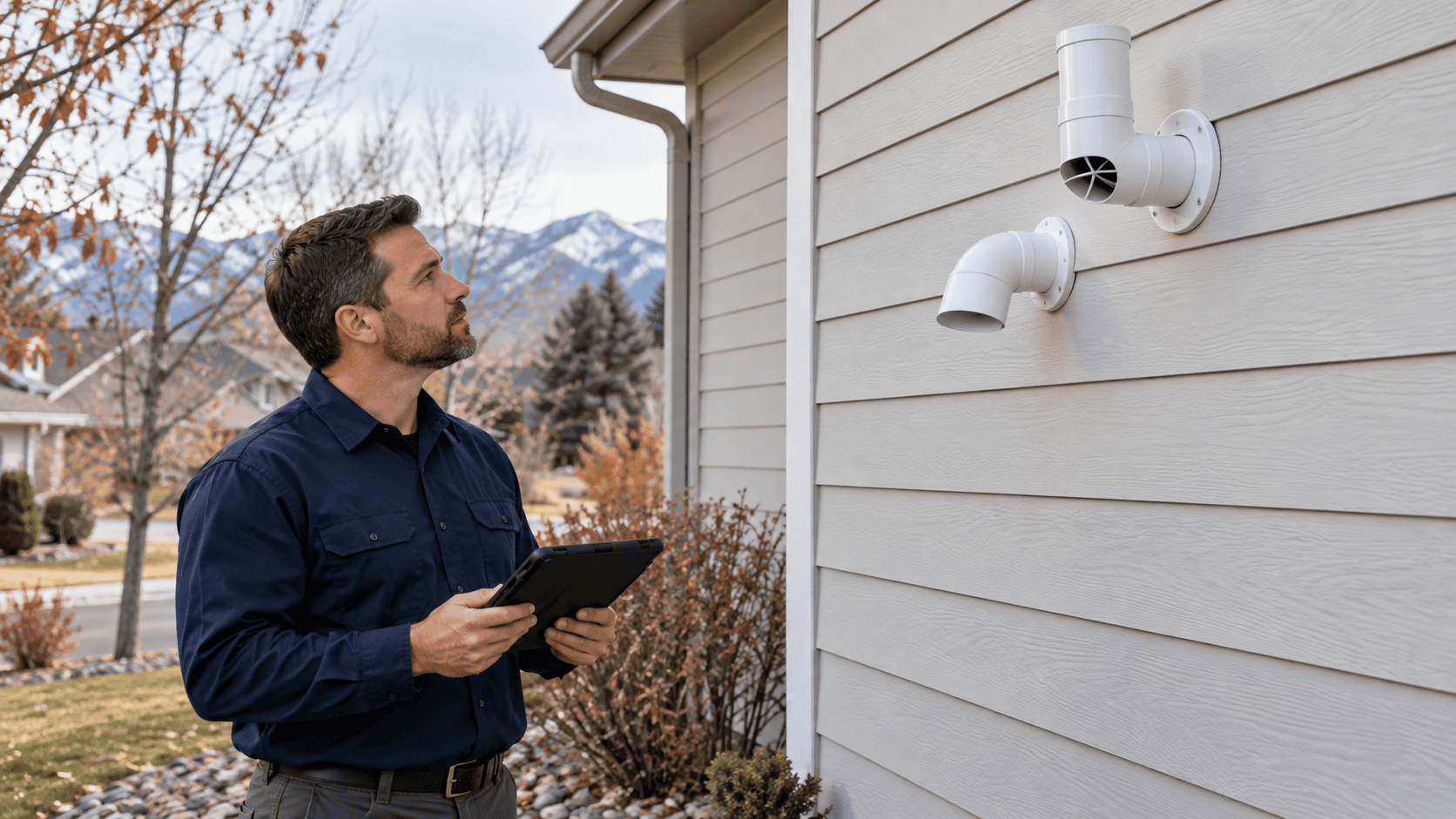
- Air supply and exhaust: Intake openings, vent materials, connections, routing, and terminations.
- Operating condition: Ignition, burner behavior, heat-exchanger evaluation, and safety controls.
- Heat delivery: Airflow and temperature rise compared with equipment specifications.
Ask for a written explanation of findings, corrective work, and whether the furnace can remain in service. A description such as “looks fine” provides less useful information than documented observations and measurements.
Why Airflow and Combustion Air Are Different
A forced-air furnace handles two distinct air functions: air used for burning fuel and air moved through the home for heating.
Some furnaces draw combustion air from the surrounding space. Others use a dedicated outdoor intake. The circulating blower moves household air across the heat exchanger and into the ducts.
A dirty filter or restricted duct system can reduce circulating airflow and contribute to overheating or safety shutdowns. Those symptoms deserve diagnosis, but they do not by themselves establish a CO leak.
Our article What Is Static Pressure in HVAC? explains how technicians investigate resistance in the air-distribution system.
For routine filter care, see How Often Should You Replace HVAC Filters?. Use the filter type and maintenance instructions appropriate for your system.
Ordinary HVAC particle filters do not remove carbon monoxide. Replacing a filter cannot substitute for correcting a combustion or venting problem.
Can a New or High-Efficiency Furnace Still Have Problems?
Yes. New equipment still depends on correct installation and commissioning.
A high-efficiency furnace needs the specified intake and exhaust arrangement, correct fuel configuration, suitable drainage where applicable, and verified operation. An efficiency rating does not certify the condition of the installed system.
Existing equipment also deserves reevaluation after relevant changes. Enclosing a mechanical room, remodeling, changing exhaust appliances, or modifying venting can affect conditions around fuel-burning equipment.
A maintenance history helps identify changes over time. Our article Why Regular Preventive HVAC Maintenance Saves Money Long-Term explains the value of consistent service.
Which Warning Signs Need Attention?
Schedule prompt professional diagnosis for repeated shutdowns, ignition problems, soot, unusual operating noises, or visible vent damage. These observations can indicate a problem, but homeowners should not use them to identify the cause themselves.
A blue flame does not prove that combustion and venting are safe. Likewise, an absence of soot does not rule out a problem. Avoid opening burner compartments or bypassing switches to investigate.
Cold rooms and uneven heat may involve a different part of the system. Our guide Why Is One Room Colder Than the Rest of My House? covers common comfort concerns.
Thermostat settings and compatibility may also affect cycling and comfort. Programmable Thermostats and Smart Controls: Are They Worth It? provides background, but a thermostat upgrade cannot correct unsafe combustion.
If the furnace stops heating, use the planning guidance in What Happens When Heating or A/C Systems Fail in Denver Homes? and arrange diagnosis.
What Should You Do During a Possible CO Emergency?
Carbon monoxide exposure can cause headache, dizziness, weakness, nausea, vomiting, chest pain, or confusion. Symptoms are not a reliable way to measure exposure, and people may be affected before recognizing a problem. CDC
If a CO alarm sounds or you suspect exposure:
- Move everyone, including pets when possible without delaying escape, outdoors.
- Call 911 from outside and describe the alarm or suspected exposure.
- Follow emergency responders’ directions and seek medical evaluation as advised.
- Stay outside until responders say reentry is safe.
- Arrange qualified service before affected equipment returns to operation.
Do not wait for an HVAC appointment, silence the alarm and resume normal activity, or remain indoors to take measurements.
How Can Denver Homeowners Prepare Before Winter?
Have fuel-burning heating equipment professionally serviced each year. Tell the company about any shutdowns, recent remodeling, unusual odors, or prior alarm events when booking.
Install CO alarms on every level and outside sleeping areas, following the alarm manufacturer’s placement instructions and applicable local requirements. Test and replace them as directed. A smoke alarm detects CO only if it is specifically a combination smoke-and-CO model. CDC
Keep the furnace’s required service clearances and air openings unobstructed. From a safe ground-level location, watch for obvious snow or debris at outdoor terminations; arrange service for inaccessible or damaged components.
For broader seasonal planning, use Is Your HVAC System Properly Winterized for Colorado’s Climate?.
Frequently Asked Questions
1. Does Denver’s Altitude Affect Furnace Combustion?
Yes. Lower air density means less oxygen in a given volume of air. Gas furnaces must be installed and configured for the actual elevation using the manufacturer’s instructions.
2. Does Living at Altitude Automatically Make a Furnace Unsafe?
No. A furnace approved for the location, correctly installed, properly vented, and maintained can operate safely. Altitude makes correct setup and verification important.
3. Do All Denver Furnaces Need the Same Altitude Adjustment?
No. Requirements depend on the model, fuel, elevation, and manufacturer instructions. Some equipment requires approved parts or settings; there is no universal adjustment.
4. Can I Adjust Furnace Gas Pressure Myself?
No. Gas pressure, burner orifices, pressure switches, and combustion settings require qualified professional service and appropriate instruments.
5. Can I Smell Carbon Monoxide From My Furnace?
No. Carbon monoxide is odorless and colorless. A fuel-gas odor is a separate emergency warning and also requires leaving the building and calling for help from outside.
6. Does a Blue Burner Flame Prove the Furnace Is Safe?
No. Flame appearance alone cannot verify carbon monoxide levels, venting performance, or heat-exchanger condition. Professional testing is needed.
7. What Should I Do if My Carbon Monoxide Alarm Sounds?
Move everyone outdoors immediately and call 911 from outside. Do not return until emergency responders say it is safe. Do not stay inside to troubleshoot the furnace.
8. Does a High-Efficiency Furnace Still Need Combustion Testing?
Yes. A high efficiency rating does not verify correct fuel setup, intake and exhaust installation, or current operating condition.
9. How Often Should a Gas Furnace Be Serviced?
Have fuel-burning heating equipment serviced by a qualified technician every year, following the manufacturer’s maintenance instructions. New symptoms or alarms require attention sooner.
10. Can an HVAC Filter Remove Carbon Monoxide?
Ordinary HVAC particle filters do not remove carbon monoxide. Working CO alarms, proper combustion and venting, and professional maintenance provide different layers of protection.

What You Should Do Next
If your furnace has not had a documented combustion evaluation, ask Teamworks Mechanical about service that addresses the actual model, fuel, elevation, venting, and operating measurements.
Have the model information, maintenance history, and a description of symptoms ready when you call. Ask what testing is included and request a clear explanation of the findings.
Call Teamworks Mechanical at 720-447-3157 or visit teamworkhvac.com to discuss furnace service in the Denver metro area.
For a CO alarm or suspected exposure, leave the home and call 911 from outside first.
Authority and Safety References
- CDC: Carbon Monoxide Poisoning Basics
- U.S. Consumer Product Safety Commission: Carbon Monoxide
- Denver Fire Department: Home Fire Safety
- Lennox EL296UHV Product Specifications—an example of model-specific altitude requirements, not instructions for other furnaces.


